
Connecting with C-level executives — CEOs, CFOs, CTOs, and other top decision-makers — is one of the most valuable skills in business development and leadership. These senior leaders hold the keys to large budgets, strategic partnerships, and long-term contracts. However, reaching them and earning their attention requires strategy, credibility, and a tailored approach.
In this guide, you’ll learn what it takes to engage C-level leaders effectively, why it matters, and practical steps you can apply right away.
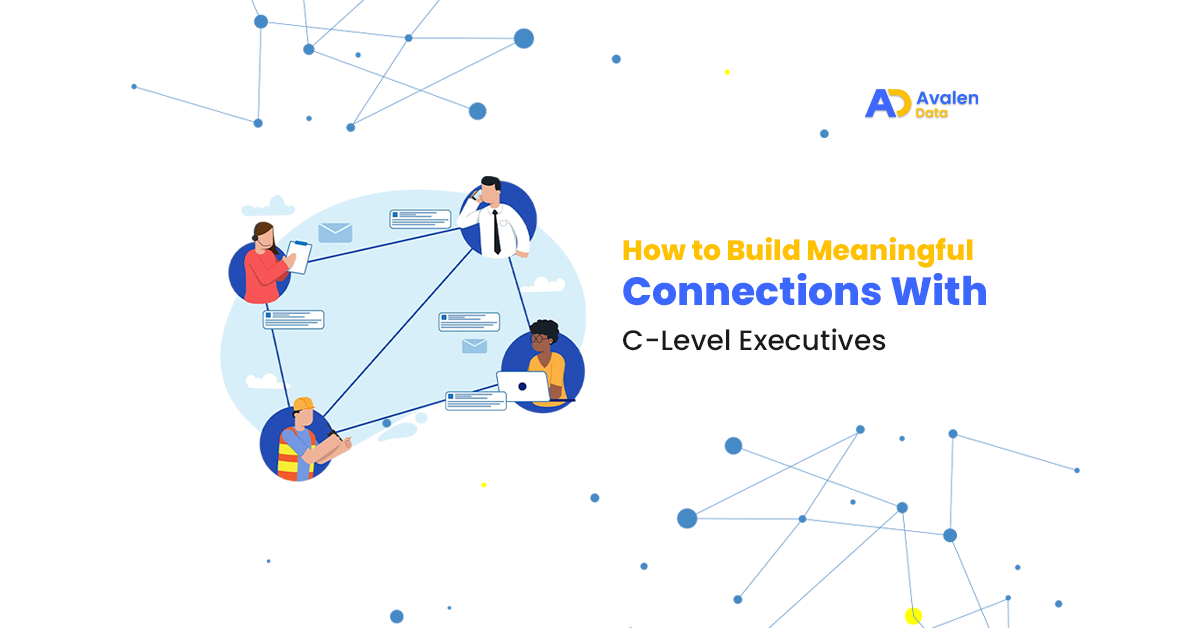
C-level executives shape strategy, prioritize projects, and control high-impact decisions. Developing a direct connection with them can result in:
Faster decision cycles
Stronger strategic partnerships
Higher-value contracts
Clear alignment between goals and execution
Expanded influence for your product or service
C-level leaders are focused on outcomes. If you can help them solve strategic problems, you gain more than a meeting — you gain a trusted advisor status.
To connect with senior leaders, you must understand what drives them. Most executives focus on:
Revenue growth
Operational efficiency
Risk reduction
Talent retention
Innovation and competitive advantage
They are less interested in features and more interested in business impact. Your message should speak to their goals, not your product’s technical details.
Here’s a structured approach that works across industries.
Before you reach out, learn about the executive and their organization:
Recent business moves and press releases
Company priorities and strategy
Industry challenges
Leadership interests and background
This builds context and informs a personalized message — not a generic pitch.
When writing your first message, avoid general statements. Great executive outreach includes:
A relevant observation about their business
A concise value proposition
A clear reason you want to connect
A simple call to action
Executives are busy — make each word count.
Cold outreach works, but warm introductions convert far better. Consider:
Mutual connections on LinkedIn
Industry groups or associations
Referrals from colleagues or partners
Being introduced through someone they trust significantly increases your credibility.
Different executives prefer different communication channels. Common approaches include:
LinkedIn messages
Personalized email
Industry events or conferences
Speaking engagements or panels
Professional associations
Choose the channel that most naturally fits the context of your relationship.
C-level executives evaluate requests based on value first, not urgency. Instead of asking for a meeting outright, consider offering:
A concise insight based on research
A brief analysis relevant to their strategy
A case study on a similar challenge
This shows you’re focused on their goals, not your agenda.
Respectful follow-ups improve response rates without crossing boundaries. A good cadence might include:
An initial outreach
A follow-up after 3–5 business days
A final touchpoint after one to two weeks
Each message should add value or insight, not just repeat the previous ask.
Messages like “I’d love to talk about our solution” are too broad. Always tie your outreach to a specific business outcome.
Executives want to solve problems, not listen to pitches. Focus on insight, outcomes, and real value.
Long paragraphs, excessive details, or technical jargon dilute your message. Keep communication concise and clear.
Example Email Template (High-Level Impact):
Subject: Insight on [Executive’s Company] Growth Strategy
Hello [Name],
I noticed [specific observation related to their business]. Many organizations in your space are facing [challenge].
We recently helped a similar company achieve [quantifiable result] by focusing on [strategic approach]. I thought this might be relevant to your goals for [initiative].
Would you be open to a brief discussion next week?
Regards,
[Your Name]
Once you secure a conversation, focus on:
Understanding their strategic priorities
Asking smart, open-ended questions
Sharing relevant insights or benchmarks
Offering options rather than a single rigid solution
Summarizing next steps clearly at the end
The more you listen and learn, the stronger your relationship becomes.
Connecting with executives is both an art and a skill. Track:
Response rate of your outreach
Meetings booked
Conversion from conversation to opportunity
Engagement quality during discussions
Long-term outcomes (partnerships, contracts, referrals)
Use this data to refine messaging, channels, and timing.
Engaging C-level executives requires deliberate strategy, deep research, and a focus on business value. Senior leaders are not unreachable — they are selective. If you speak to their priorities with clarity and respect, you improve both your credibility and the chance of building meaningful business relationships.
The key is not persistence alone, but purposeful engagement.
High-quality, verified marketing data that helps B2B teams reach the right audience and grow faster.
30 N Gould St Ste R Sheridan, WY 82801.
+1 929-297-9875
info@avalendata.com
© Avalen Data. All Right Reserved 2025.